The National Society of High School Scholars (NSHSS) frequently lands on the radar of high-achachieving students and their families, promising prestige, scholarships, and invaluable networking. Yet, beneath the shiny veneer of academic recognition, a chorus of common criticisms and concerns regarding NSHSS often emerges, prompting prospective members to question its true value. Is NSHSS the legitimate honor society it claims to be, or is it merely a well-marketed "pay-to-play" scheme designed to lighten your wallet? Navigating these waters requires careful consideration, and we're here to help you dissect the hype from the reality.
At a Glance: Key Concerns About NSHSS
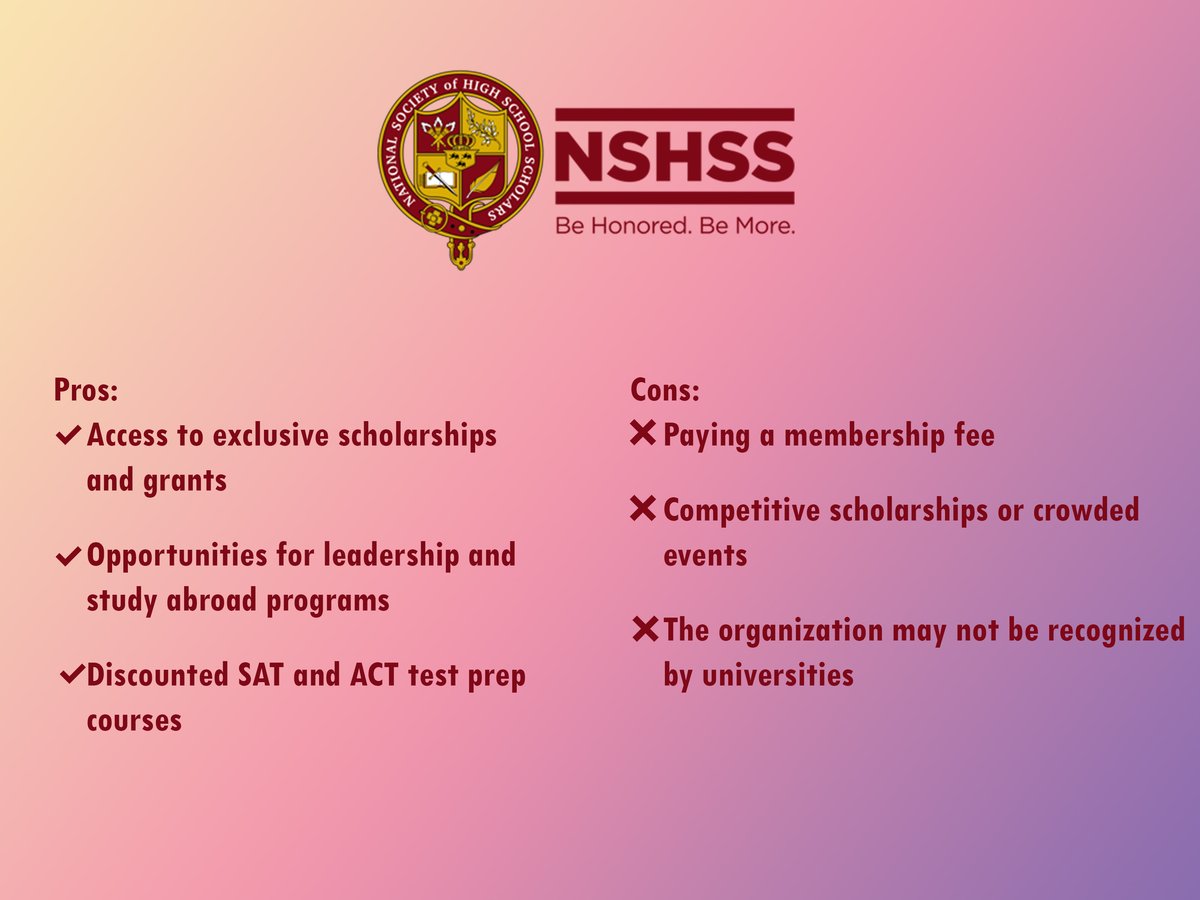
- Initial Membership Fees: A non-refundable fee (typically $60-$100) is required, sparking "pay-to-play" debates.
- "Pay-to-Play" Perceptions: Critics argue the financial barrier overshadows genuine merit, questioning the return on investment.
- Recruitment Strategy: Primarily targets high-GPA students, potentially leading to an impression of exclusivity without offering truly unique benefits to all members.
- Inconsistent Member Value: While some find significant benefits (scholarships, networking), others report a less impactful experience.
- Competitive Landscape: Many free or lower-cost honor societies exist, offering similar or superior opportunities.
- Reputation & Prestige: Often confused with more established, invitation-only societies like the National Honor Society (NHS), but carries less weight with some admissions officers.
Understanding NSHSS: A Quick Primer on its Purpose and Promise
Before diving into the critiques, it's essential to understand what NSHSS is and what it aims to offer. Founded in 2002 by Claes Nobel, a descendant of Alfred Nobel (creator of the Nobel Prizes), NSHSS positions itself as an international honor society dedicated to recognizing academic excellence in high school students. With over 1.5 million members globally, the organization typically invites students with a GPA of 3.5 or higher, aiming to foster a community of scholars committed to academic achievement, community service, and leadership.
Its stated benefits are compelling: a prestigious title for college applications, access to over $1 million in annual scholarships, educational opportunities like leadership conferences, networking with peers and professionals, and skill development programs. For many families, an invitation to NSHSS feels like a validation of years of hard work, a signal of a bright future. But does the reality match the promise for every student? This is where the concerns begin to surface.
The "Pay-to-Play" Predicament: Is NSHSS Primarily a Business?
Perhaps the most significant and frequently voiced criticism of NSHSS revolves around its financial model. Unlike many traditional honor societies which are often school-based and charge minimal or no fees, NSHSS requires an upfront, non-refundable membership fee, typically ranging from $60 to $100. This fee is the primary gateway to becoming an NSHSS member, immediately triggering concerns about a "pay-to-play" dynamic.
Consider this: if the core criteria for membership is a high GPA (3.5 or higher), shouldn't recognition be based purely on merit, not on a student's or family's ability to pay a fee? Critics argue that by charging for membership, NSHSS shifts its focus from solely celebrating academic achievement to generating revenue. For many, this model raises a red flag, suggesting that the organization might prioritize monetary gain over genuine academic recognition.
The argument isn't that NSHSS offers nothing for its fee. Rather, it questions the value provided relative to the cost. In a world where families are already grappling with rising education expenses, an additional fee for an honor society membership can feel like an unwarranted burden, especially if the perceived benefits don't materialize.
Recruitment Practices: A Question of Exclusivity and Impact
Another area drawing considerable scrutiny is NSHSS's recruitment strategy. The organization is accused of primarily recruiting from high-achieving schools, sending out widespread invitations to students who meet their GPA criteria. While this sounds logical for an honor society, the sheer volume of invitations can create an impression of exclusivity without necessarily delivering truly exclusive opportunities.
Think of it this way: if almost everyone with a certain GPA receives an invitation, what makes membership genuinely distinctive? For some, this broad recruitment dilutes the perceived prestige. It's not about being selected from a highly competitive pool based on a holistic review; it's about meeting a GPA threshold and paying a fee. This approach can make the NSHSS distinction feel less like a hard-earned honor and more like a mass-marketing effort.
Furthermore, this recruitment method, while efficient for NSHSS, potentially alienates talented students from underserved communities who might not attend schools that are typically targeted, or whose families might struggle with the membership fee even if invited. If the goal is truly to recognize academic excellence broadly, some argue the recruitment process could be more inclusive and less reliant on blanket mailings that may disproportionately benefit those already privileged.
The Inconsistent Value Proposition: Why Some Members Feel Underwhelmed
One of the most recurring themes in online discussions and testimonials about NSHSS is the inconsistency of member value. While NSHSS highlights impressive statistics – over $1 million annually in scholarships, various educational events, and networking opportunities – the actual experience can vary significantly from one member to another.
Many students join NSHSS with high expectations, envisioning a direct pipeline to scholarships, exclusive events, and impactful connections. However, some find the reality to be less fulfilling. They might receive a flurry of emails about events that require additional fees or travel, or find that the scholarships are highly competitive and not as accessible as initially perceived. The networking opportunities might exist, but require proactive engagement from the student to be truly valuable, which isn't unique to NSHSS.
It’s often a case of perception versus reality. For a student who actively seeks out and leverages every webinar, applies for every scholarship, and attends every possible event (often incurring additional costs), the membership can be beneficial. But for others, especially those who expect benefits to be automatically handed to them after paying the fee, the experience can feel like a letdown. This disconnect contributes significantly to the feeling that NSHSS might not be worth it for everyone.
Beyond the Fees: The Less Obvious Costs and Time Commitments
While the initial membership fee is the most direct financial concern, NSHSS membership can sometimes involve other, less obvious costs and commitments that potential members should consider.
- Event Fees and Travel: NSHSS hosts various events, such as leadership conferences and scholar gatherings, often in major cities. While these can be valuable experiences, attending them almost always incurs additional costs for registration fees, travel, accommodation, and meals. For many families, adding these expenses on top of the initial membership fee makes participation prohibitive.
- Time Investment: To truly extract value from NSHSS membership, students need to actively engage. This means spending time researching and applying for scholarships, participating in webinars, seeking out mentorship opportunities, and engaging with the online community. For already busy high school students juggling academics, extracurriculars, and college applications, this additional time commitment can be significant, and without it, the benefits can remain largely untapped.
- Opportunity Cost: Every dollar spent and every hour invested in one activity is a dollar and hour not spent on another. Families must weigh whether the financial and time investment in NSHSS could be better allocated to other academic pursuits, test prep, local community service initiatives, or even other honor societies that might offer a more tangible return.
Separating Fact from Fiction: Common Misconceptions About NSHSS
The online chatter around NSHSS is rife with misinformation and strong opinions. Let's address a few common misconceptions directly:
Myth 1: NSHSS is the same as the National Honor Society (NHS).
Reality: This is a huge point of confusion. The National Honor Society (NHS) is a distinct, well-established, school-based organization founded in 1921. NHS chapters are typically run by high schools, and membership is often by invitation based on scholarship, service, leadership, and character, with minimal or no fees. NSHSS, founded in 2002, is an independent, fee-based organization that sends direct invitations to students based primarily on GPA. While both are "honor societies," they operate very differently and carry different weight in the eyes of many admissions officers.
Myth 2: Joining NSHSS guarantees scholarships or college acceptance.
Reality: NSHSS offers access to scholarships, but it doesn't guarantee them. Like all scholarships, NSHSS awards are competitive, requiring applications and meeting specific criteria. Similarly, while listing NSHSS on your resume might show academic achievement, it is rarely a deciding factor for college admissions. Colleges look for a holistic profile, and membership in a fee-based society typically holds less weight than unique achievements, strong essays, or deep involvement in school-based honors.
Myth 3: NSHSS is a scam.
Reality: While many criticisms point to its "pay-to-play" model and inconsistent value, NSHSS is not a scam in the traditional sense. It is a legitimate, for-profit organization that provides services (scholarship access, events, networking) in exchange for a fee. The debate isn't about its legitimacy, but its value proposition and prestige compared to its cost and other available options.
What Do College Admissions Officers Think of NSHSS?
This is a critical question for many students considering NSHSS. The consensus among many college admissions professionals is nuanced.
For highly selective colleges, NSHSS membership alone is generally not a significant differentiator. Admissions officers are looking for genuine impact, leadership, and a commitment to specific interests. While any honor society membership indicates academic achievement, they often prefer school-based honors like NHS or rigorous academic programs that are directly tied to a student's high school experience. A membership in a national, fee-based organization, especially one with a broad recruitment strategy, may not stand out as much.
However, for some colleges, particularly less selective ones, NSHSS membership can serve as a positive reinforcement of a student's academic record. It signals an interest in academic pursuits and a willingness to engage in enrichment opportunities.
The key takeaway is this: NSHSS membership is unlikely to be a "make-or-break" factor in competitive admissions. Its value lies more in the opportunities a student actively pursues and leverages through NSHSS, rather than the mere fact of membership itself. If you've won an NSHSS scholarship or participated in a unique NSHSS-sponsored leadership program, those accomplishments are what will truly impress, not just the title.
Making an Informed Decision: Your Action Plan
Given the array of benefits and criticisms, how should you proceed if you receive an NSHSS invitation? The decision to join should be a well-researched and personal one, aligning with your academic goals, future aspirations, and personal values. Here’s an actionable plan:
- Do Your Homework (Beyond the Invitation): Don't just read the glossy brochure. Dive into independent reviews, forums, and articles. Search for "NSHSS reviews," "NSHSS pros and cons," and discussions on college counseling websites. Look for recurring themes in both positive and negative feedback.
- Evaluate Your Financial Commitment: Can you comfortably afford the initial membership fee and potential additional costs for events or programs you might want to attend? Be realistic about your budget. If the fee presents a hardship, consider if other, free or lower-cost opportunities might offer better value.
- Assess Your Goals and Aspirations:
- Are you seeking scholarships? Research the specific NSHSS scholarships carefully. What are the eligibility criteria? How competitive are they? What is the application process like? Compare them to other scholarship opportunities you could pursue.
- Are you hoping for networking or leadership opportunities? Consider how proactive you are. These benefits rarely come without effort. Are there similar, perhaps more targeted, opportunities available through your school, local community, or other organizations?
- Is prestige your primary driver? Understand that the perceived prestige of NSHSS can vary. If you're looking for a powerful resume builder, focus on tangible achievements and genuine leadership roles rather than just listing memberships.
- Engage with Current Members or Alumni: The best insights often come from those who have direct experience. If possible, talk to students who are currently NSHSS members or have been in the past. Ask them about their experiences:
- What benefits did they actually utilize?
- Did they feel the membership fee was worth it?
- Did it help them with college applications or scholarships?
- What were the downsides, if any?
- Compare Alternatives: NSHSS isn't the only honor society or academic enrichment program available.
- National Honor Society (NHS): If your school has an NHS chapter, investigate its membership process and benefits. NHS is widely recognized and respected by colleges.
- Subject-Specific Honor Societies: Many high schools offer honor societies for specific subjects (e.g., National English Honor Society, Science National Honor Society). These can demonstrate deep commitment to a particular academic area.
- School-Based Awards & Recognition: Often, school-level awards or department honors carry significant weight.
- Local Volunteering & Leadership: Actively participating in community service or taking on leadership roles in school clubs can provide much more impactful experiences and resume builders than a general honor society membership.
- Consider Your Unique Profile: If you already have a robust list of extracurriculars, leadership roles, and academic achievements, adding NSHSS to your resume might not significantly enhance your profile. If you're looking for avenues to explore new interests or gain access to resources, evaluate if NSHSS is the most effective or most affordable way to do so.
Ultimately, NSHSS offers a platform, but the value derived is highly dependent on how actively a student engages with that platform.
The Bigger Picture: What True Recognition Looks Like
In the quest for academic recognition, it's easy to get swept up in the allure of impressive titles and invitations. However, true academic excellence and leadership are best demonstrated through tangible actions and verifiable impact. Colleges and scholarship committees are looking for students who:
- Excel Academically: Your GPA, challenging coursework, and standardized test scores speak volumes.
- Demonstrate Leadership: Taking initiative, organizing events, and inspiring others in school clubs, sports teams, or community organizations.
- Engage in Meaningful Service: Contributing genuinely to your community, not just checking a box.
- Pursue Passions Deeply: Showing sustained interest and achievement in specific areas, whether through research, competitions, or independent projects.
- Develop Unique Skills: Public speaking, critical thinking, problem-solving, and collaboration honed through diverse experiences.
An honor society, whether NSHSS or another, can be a part of this picture, but it should complement, not replace, these core elements of a strong student profile. The most impactful recognition often comes from within your school or community, or from competitive, merit-based programs that require more than just a membership fee.
The decision to join NSHSS, like any investment in your education, warrants thorough investigation. By understanding the common criticisms and weighing them against the potential benefits, you can make an empowered choice that truly supports your academic journey and future aspirations. Focus on what truly matters: genuine achievement, impactful involvement, and a clear path towards your goals.